Care
Looking after your handmade knife will keep it sharp, beautiful, and ready for a lifetime of use. Here’s how to get the best from your blade.
Damascus Steel
High carbon steel blades are known for their performance and edge retention, but they do require a little extra care.
Clean immediately after use: Hand wash your knife with warm water and mild soap, rinse well, and dry thoroughly with a clean cloth. Never leave it wet or sitting in the sink.
No dishwashers or soaking: Dishwashers and prolonged water exposure can cause rust and damage the blade and handle.
Use timber cutting boards: Soft wooden boards will help your edge last longer and stay sharper.
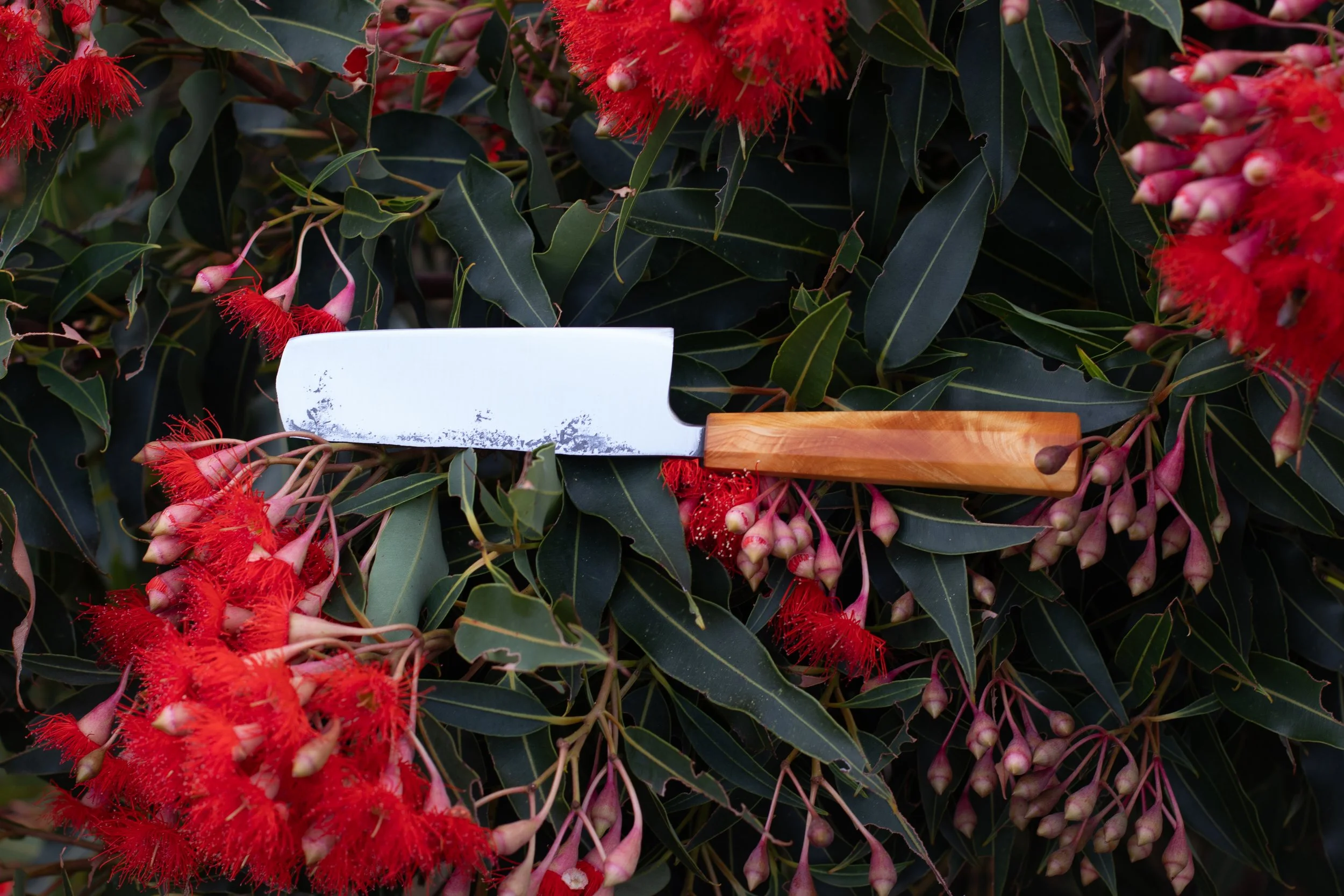
Protect the handle: If your knife has a wooden handle, a quick rub with beeswax now and then will nourish and seal the timber.
About the patina: Over time, your carbon steel blade will naturally develop a patina — a darkened layer that acts as extra protection against rust. This is completely normal and part of what makes each knife unique. If you prefer a brighter finish, gently polish with a Scotch-Brite pad, rinse, dry, and oil the blade again.
Stainless Steel
Stainless steel blades are more forgiving and lower maintenance — perfect for everyday use.
Clean after each use: Rinse with warm water, wash if needed, and dry thoroughly.
No dishwashers or soaking: Avoid putting your knife in the dishwasher or leaving it submerged — the harsh detergents and water can still damage the edge and handle.
Use timber cutting boards: A good soft wood board will keep your knife performing at its best.
Care for the handle: For knives with timber handles, apply a little beeswax occasionally to help protect and condition the wood.
A little care goes a long way. Treat your knife well and it will serve you for years to come.